


Quick Answer
Many new parents experience frightening intrusive thoughts after having a baby and worry that these thoughts mean they are developing postpartum psychosis. While both involve mental health after childbirth, they are not the same condition.
In fact, research suggests that approximately 80–90% of new parents experience unwanted intrusive thoughts after having a baby. Although these thoughts can feel alarming, they do not mean you want to harm your baby or that you’re developing postpartum psychosis.
Parents who experience intrusive thoughts are typically frightened by them because the thoughts go against everything they value and want for their child.
Postpartum psychosis, on the other hand, is a rare psychiatric emergency that can involve losing touch with reality, including hallucinations, delusions, severe confusion, or disorganized thinking. It requires immediate medical evaluation.
Understanding the difference can help reduce unnecessary fear while ensuring families know when emergency care is needed.
Key Takeaways
- Research suggests that approximately 80–90% of new parents experience unwanted intrusive thoughts after having a baby.
- Having intrusive thoughts does not mean you want to harm your baby.
- Parents experiencing intrusive thoughts are typically frightened by them and do not want to act on them.
- Postpartum psychosis is rare but requires immediate emergency medical care.
- The key difference is that postpartum psychosis involves a loss of contact with reality.
- If you’re worried about your mental health after having a baby, reaching out for professional support is an important first step.
Recent News Has Many Parents Asking About Postpartum Psychosis
Recent media coverage surrounding postpartum psychosis has led many new parents to ask an understandable question:
“What if I’m developing postpartum psychosis?”
For parents who have experienced intrusive thoughts after giving birth, these stories can feel especially frightening.
Many begin wondering:
- What if these thoughts mean something is wrong with me?
- What if I lose control?
- What if I hurt my baby?
These fears are incredibly common.
Fortunately, experiencing intrusive thoughts alone is not the same as experiencing postpartum psychosis.
Understanding the difference can provide reassurance while helping families recognize when immediate medical attention is necessary.
Organizations such as Postpartum Support International (PSI) emphasize that increasing awareness about postpartum psychosis is important, but so is helping parents understand how it differs from more common postpartum conditions such as anxiety, postpartum OCD, and intrusive thoughts. Education can help families recognize warning signs while also reducing unnecessary fear for parents experiencing common postpartum mental health symptoms.
Source: https://postpartum.net/clancy-case-highlights-need-for-education-about-postpartum-psychosis/
What Are Intrusive Thoughts?
Intrusive thoughts are unwanted thoughts, images, or impulses that suddenly enter your mind.
After having a baby, they often involve frightening “what if” scenarios.
Examples might include:
- Imagining accidentally dropping your baby.
- Wondering what would happen if your baby stopped breathing.
- Brief mental images of accidental harm.
- Sudden fears that something terrible could happen.
These thoughts can feel shocking because they are completely opposite of what loving parents want.
Many parents immediately think:
“Why would I even think something like that?”
The answer is that intrusive thoughts are a well-recognized experience during the postpartum period.
The thoughts themselves are not the problem.
It’s the anxiety they create that often causes parents the greatest distress.

Why Intrusive Thoughts Feel So Frightening
One of the defining features of intrusive thoughts is that they are ego-dystonic.
In other words, they feel completely inconsistent with who you are and what you want.
Parents experiencing intrusive thoughts are often horrified by them.
Rather than wanting to act on the thoughts, they typically try to:
- Push the thoughts away.
- Seek reassurance.
- Avoid situations that trigger anxiety.
- Constantly check on their baby’s safety.
- Wonder if they’re a “bad parent.”
Ironically, the very fact that these thoughts feel so upsetting often reflects how deeply the parent cares about protecting their child.
What Is Postpartum Psychosis?
Postpartum psychosis is a rare but serious psychiatric emergency that usually develops in the days or weeks after childbirth.
Unlike intrusive thoughts, postpartum psychosis can involve losing touch with reality.
Symptoms may include:
- Hallucinations (seeing or hearing things that aren’t there).
- Delusions (strongly held false beliefs).
- Severe confusion.
- Disorganized thinking.
- Extreme mood changes.
- Difficulty recognizing what is real.
- Unusual behavior that is out of character.
Someone experiencing postpartum psychosis may not recognize that something is wrong.
Because the condition can progress quickly, immediate medical evaluation is essential.
Postpartum Psychosis vs. Intrusive Thoughts
| Intrusive Thoughts | Postpartum Psychosis |
| Unwanted and distressing | May involve loss of contact with reality |
| Parent recognizes the thoughts are frightening | Insight may be significantly impaired |
| Causes anxiety and fear | May involve hallucinations or delusions |
| Parent does not want to act on the thoughts | Requires emergency psychiatric evaluation |
| Common in the postpartum period | Rare but serious |
Although both conditions involve mental health after childbirth, they are fundamentally different experiences.

Why Parents Often Confuse the Two
Many parents don’t talk about intrusive thoughts because they fear being judged.
After hearing stories about postpartum psychosis in the news, they may assume that any frightening thought means they’re developing the condition.
This misunderstanding can increase anxiety.
Some parents become afraid to tell anyone what they’re experiencing because they worry someone will think they want to harm their baby.
In reality, mental health professionals who specialize in perinatal care understand that intrusive thoughts are a common reason new parents seek support.
Talking about these thoughts with a qualified clinician is an important step toward receiving appropriate care, NOT a reason for shame.
When Should You Reach Out for Help?
Whether you’re experiencing intrusive thoughts, overwhelming anxiety, depression, or another emotional struggle after having a baby, you don’t have to figure it out alone.
Consider reaching out to a healthcare provider or mental health professional if you notice:
- Persistent anxiety that interferes with daily life.
- Intrusive thoughts that cause significant distress.
- Difficulty sleeping even when your baby is sleeping.
- Constant fear that something terrible will happen.
- Feeling emotionally numb or disconnected from your baby.
- Panic attacks or overwhelming worry.
- Depression that isn’t improving.
- Feeling unable to care for yourself or your baby.
You don’t need to wait until your symptoms become severe before asking for support.
Early intervention can make a meaningful difference in your recovery.

When Is It an Emergency?
While intrusive thoughts are common and treatable, postpartum psychosis is a medical emergency.
If a new parent is experiencing symptoms such as hallucinations, delusions, severe confusion, or behavior that suggests they have lost touch with reality, they should receive immediate emergency evaluation.
If you believe someone may be experiencing postpartum psychosis:
- Call 911 or your local emergency services if there is an immediate safety concern.
- Go to the nearest emergency department.
- Do not leave the person alone if there are concerns about their safety or the baby’s safety.
- Contact their healthcare provider immediately if emergency services are not already involved.
Prompt treatment can significantly improve outcomes for both the parent and their family.
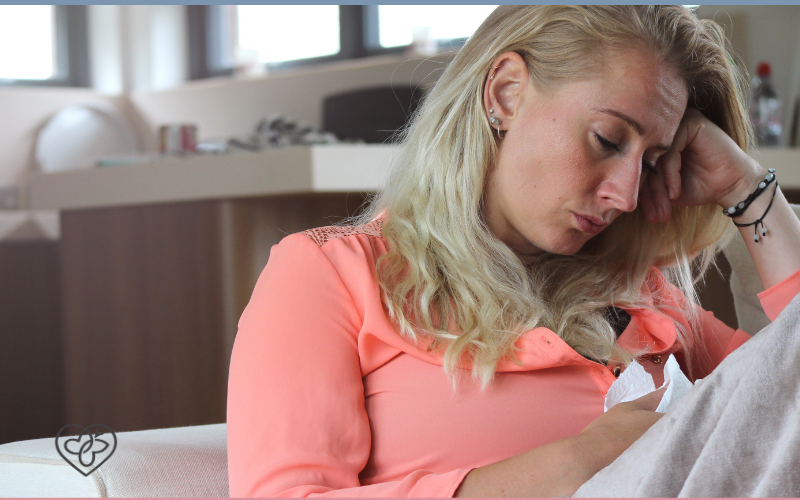
Why Talking About Intrusive Thoughts Is Important
Many parents suffer in silence because they worry that admitting intrusive thoughts will cause people to think they’re dangerous.
In reality, keeping those fears to yourself often makes anxiety worse.
Mental health professionals who specialize in perinatal mental health hear about intrusive thoughts regularly.
Their goal is not to judge you.
Their goal is to understand what you’re experiencing, help you reduce anxiety, and develop coping strategies that allow you to enjoy parenthood with greater confidence.
Talking about intrusive thoughts is often a sign that you recognize they are unwanted and are seeking support, not that you intend to act on them.

How Therapy Can Help
Many new parents feel tremendous relief simply learning that intrusive thoughts are a recognized and treatable experience.
Working with a therapist who specializes in reproductive mental health can help you:
- Understand why intrusive thoughts happen.
- Reduce fear and anxiety surrounding unwanted thoughts.
- Learn evidence-based coping strategies.
- Break the cycle of reassurance seeking and avoidance.
- Strengthen confidence in your parenting.
- Address postpartum anxiety, depression, or OCD symptoms when present.
- Feel less isolated during the postpartum period.
If you’re feeling overwhelmed after having a baby, you don’t have to navigate these emotions on your own.
At Reproductive Mental Health & Wellness, our clinicians specialize in supporting new parents through postpartum anxiety, postpartum depression, intrusive thoughts, birth trauma, and other perinatal mental health concerns. Through secure online therapy for California residents, we provide compassionate, evidence-based care to help parents better understand what they’re experiencing and begin feeling like themselves again.
Learn more about our Postpartum Depression & Anxiety Therapy services and discover how our reproductive mental health specialists can support you during your postpartum journey.

You Are Not Alone—And You Are Not Your Thoughts
Having an intrusive thought after becoming a parent can be incredibly frightening.
Many loving parents worry that the thought itself says something about who they are.
It doesn’t.
Intrusive thoughts are, by definition, unwanted. They often cause distress precisely because they go against a person’s values and deepest desire to protect their child.
If recent news stories have left you feeling anxious about postpartum psychosis, know that frightening thoughts alone do not mean you’re experiencing psychosis.
If you’re struggling with postpartum anxiety, intrusive thoughts, or simply wondering whether what you’re’re experiencing is normal, Reproductive Mental Health & Wellness is here to help. Our clinicians specialize in reproductive and perinatal mental health and provide compassionate online therapy for new parents throughout California.
You deserve accurate information, compassionate support, and a safe place to talk about what you’re experiencing. Healing is possible, and you don’t have to navigate the postpartum period alone.
Frequently Asked Questions
Can intrusive thoughts mean I’m developing postpartum psychosis?
Not necessarily. Intrusive thoughts are common during the postpartum period and are typically unwanted and distressing. Postpartum psychosis is a separate, rare psychiatric emergency that involves losing touch with reality. If you’re concerned about your symptoms, it’s important to speak with a qualified healthcare provider or mental health professional.
Is it normal to have scary thoughts after having a baby?
Yes. Almost all new parents experience unwanted intrusive thoughts after childbirth. These thoughts can feel alarming, but they do not mean you want to harm your baby or that you will act on them.
What are signs of postpartum psychosis?
Postpartum psychosis may include hallucinations, delusions, severe confusion, disorganized thinking, unusual behavior, or losing touch with reality. Because it is a psychiatric emergency, immediate medical evaluation is essential if these symptoms are present.
Should I tell my therapist about intrusive thoughts?
Yes! Reproductive mental health therapists are trained to discuss intrusive thoughts in a supportive, nonjudgmental way. Sharing these experiences helps ensure you receive appropriate care and reassurance.
Can postpartum anxiety cause intrusive thoughts?
Yes. Intrusive thoughts are commonly associated with postpartum anxiety and postpartum OCD. A mental health professional can help determine what you’re experiencing and recommend appropriate treatment.
When should I seek emergency help?
Seek immediate emergency care if you or someone you know has symptoms such as hallucinations, delusions, severe confusion, or behavior suggesting a loss of contact with reality. If there is an immediate safety concern, call 911 or go to the nearest emergency department.